


Integrate SafeDep MCP in GitHub Agentic Workflow
On this page
Overview
GitHub Agentic Workflow is a brand new feature from GitHub. It is essentially GitHub Actions, but users write English in .md files instead of steps in .yml.
Here is a simple example of a GitHub Agentic Workflow:
---# metadata, IO, AI settings---
# Daily Repo Status
Create an upbeat daily status report for the repo as a GitHub issue.
## What to include
- Recent repository activity (issues, PRs, discussions, releases, code changes)- Progress tracking, goal reminders and highlights- Project status and recommendations- Actionable next steps for maintainers
## Style
- Be positive, encouraging, and helpful 🌟- Use emojis moderately for engagement- Keep it concise - adjust length based on actual activityIt uses AI agents in CI to execute this prompt, providing them with context about the repository, issues, pull requests, discussions, etc. It can be
triggered just like existing GitHub Actions are triggered, such as on: pull_request, on: issues_create, on: daily, etc.
Creating New Agentic Workflow
GitHub CLI is required when working with Agentic Workflows. If it is not already installed, install it now.
Follow the Getting Started documentation for Agentic Workflows to create your first agentic workflow.
# install gh-aw extensiongh extension install github/gh-awCreate new agentic workflow:
# at root of your projectgh aw add-wizard githubnext/agentics/daily-repo-statusThis will setup Agent Provider + API Keys in GitHub secrets.
At a high level, the flow looks like this:
-
Create a
.mdfile in.github/workflows/new-agent-workflow.md -
Write your agentic workflow, and then compile it.
Terminal window gh aw compileThis will create a
.lock.ymlfile, which is an actual GitHub Actions file that thegh awCLI generates from our.mdfile. -
Commit and Push!
Using SafeDep MCP
Agentic Workflows support MCP, which helps integrate any MCP server that can then be used by agents running in CI.
We will integrate the SafeDep MCP server to run on every Pull Request and check the security posture of any introduced or updated dependencies.
Create a new .github/workflows/safedep-check-on-pr.md file.
touch .github/workflows/safedep-check-on-pr.mdPaste this content into that file:
---on: pull_request
permissions: contents: read pull-requests: read
safe-outputs: add-comment: target: 'triggering' # Ensures the comment is posted on the PR that started the workflow
mcp-servers: safedep: url: 'https://mcp.safedep.io/model-context-protocol/threats/v1/mcp' headers: Authorization: '${{ secrets.SAFEDEP_API_KEY }}' X-Tenant-ID: '${{ secrets.SAFEDEP_TENANT_ID }}' allowed: ['*']---
# SafeDep Security Check
Your task is to use SafeDep security checks to determine if the OSS packages introduced or updated in the Pull Request are safe to merge.Note: We are using secrets here; you must add
SAFEDEP_API_KEYandSAFEDEP_TENANT_IDto your repository secrets. See the SafeDep MCP Docs for a guide on how to get these values. Compile the agentic workflow file by running:
# from root of your projectgh aw compileThis will create a new .yml GitHub Actions file.
Commit and Push!
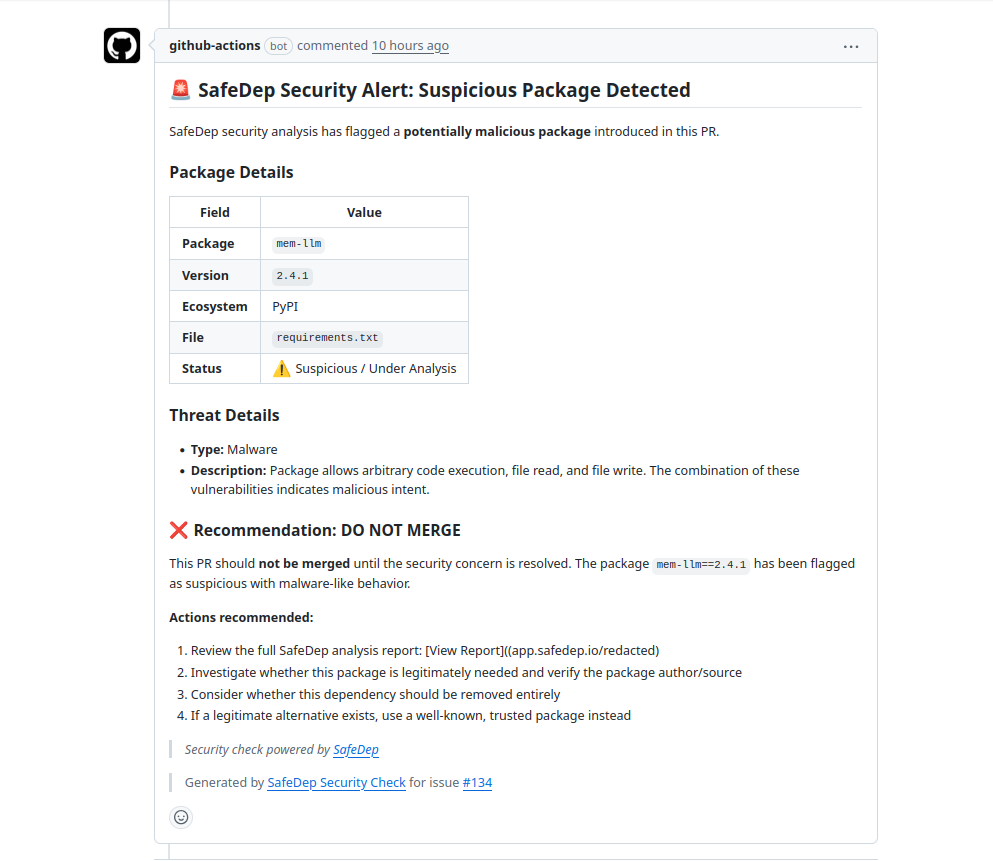
This workflow will be executed on every pull request, and a summary comment will be posted on it.
Conclusion
Using SafeDep MCP in GitHub Agentic Workflow is a powerful way to integrate AI SDLC security into your CI/CD, we have only scratched the surface, we can also create a workflow to run daily or weekly that creates a summary report of the security posture of all OSS packages. Possibilities are endless.
- GitHub Agentic Workflow
- SafeDep MCP
- AI
Author

Kunal Singh
safedep.io
Share
The Latest from SafeDep blogs
Follow for the latest updates and insights on open source security & engineering

October 2026 Security Incident Review: PHP, Binance, Cursor, LiteLLM and More
October was Cybersecurity Awareness Month. It was also the month PHP, Railway, OpenCode, Binance, Polymarket, Cursor, LiteLLM and eight more made the news for a security incident. A short recap of...
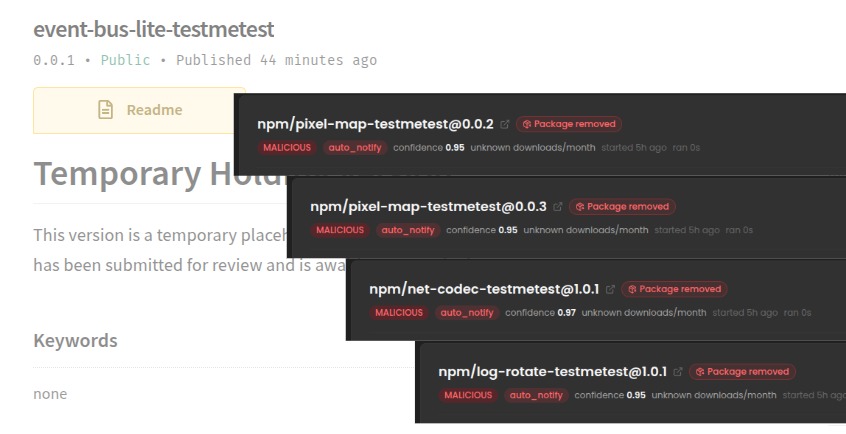
testmetest npm Packages Carry a Miasma-Family Worm
19 npm packages carry a Miasma-family worm that steals credentials, spreads to other packages and installs a wiper. The newest builds start the worm when an application loads the package.

eMudhra CA Key Compromise: Response Guide for Developers
Anyone can compute eight eMudhra intermediate CA private keys from public certificates. Browsers block the compromised intermediates, but CI runners, containers, JVMs and Go binaries can still trust...

Compromised LiteLLM 1.107.0 on PyPI Installs a Credential Stealer and Backdoor
Every wheel of LiteLLM 1.107.0 on PyPI installs a credential stealer and a remote code execution backdoor. Both run each time Python starts. The code is not in the upstream GitHub source.


Ship Code.
Not Malware.
Start free with open source tools on your machine. Scale to a unified platform for your organization.
