


Introducing SafeDep Threat Intel
SafeDep Threat Intel is now available as an add-on to any paid plan.
It gives SOC and cyber defense teams the malicious package intelligence behind SafeDep’s platform. They can query it, or push it into the tools they already run to protect against supply chain attacks in their network.
Check out the 📑 Documentation
What’s in it?
Malicious package feed API. A continuous stream of suspicious and confirmed malicious packages, campaigns, and indicators of compromise (IoCs) across npm, PyPI, Go, Maven, and more.
export SAFEDEP_API_KEY="<your-api-key>"export SAFEDEP_TENANT_ID="your-company.safedep.io"export TI="https://api.safedep.io/safedep.services.threatintel.v1.ThreatIntelService"
curl -sS "$TI/ListPackageReports" \ -H "Content-Type: application/json" \ -H "Authorization: $SAFEDEP_API_KEY" \ -H "X-Tenant-ID: $SAFEDEP_TENANT_ID" \ -d '{"pagination":{"pageSize":5,"sortOrder":"SORT_ORDER_DESCENDING"}}'SafeDep Threat Intel Dashboard. A curated place for all verdicts, reasoning, and campaigns in the SafeDep console.
Package Verdict Feed
Package Verdict Details
Campaigns
🚀 Quickstart with SafeDep Threat Intel
Support
Contact us via email, Discord and other channels.
- threat-intelligence
- malware
- supply-chain
- secops
Author

Kunal Singh
safedep.io
Share
The Latest from SafeDep blogs
Follow for the latest updates and insights on open source security & engineering

October 2026 Security Incident Review: PHP, Binance, Cursor, LiteLLM and More
October was Cybersecurity Awareness Month. It was also the month PHP, Railway, OpenCode, Binance, Polymarket, Cursor, LiteLLM and eight more made the news for a security incident. A short recap of...
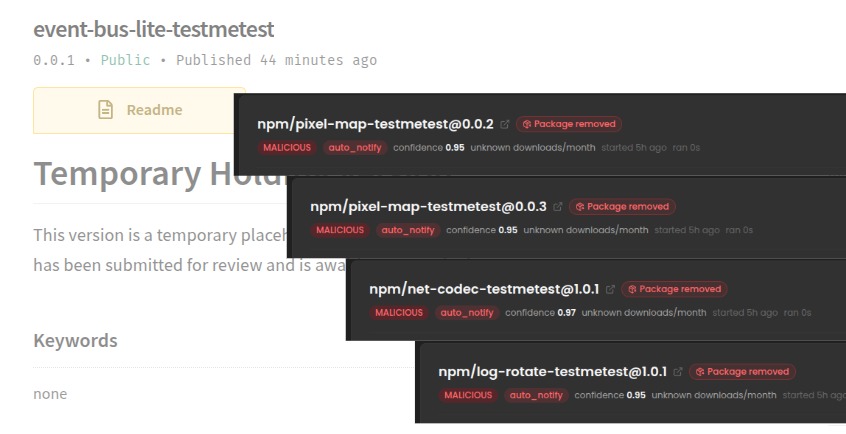
testmetest npm Packages Carry a Miasma-Family Worm
19 npm packages carry a Miasma-family worm that steals credentials, spreads to other packages and installs a wiper. The newest builds start the worm when an application loads the package.

eMudhra CA Key Compromise: Response Guide for Developers
Anyone can compute eight eMudhra intermediate CA private keys from public certificates. Browsers block the compromised intermediates, but CI runners, containers, JVMs and Go binaries can still trust...

Compromised LiteLLM 1.107.0 on PyPI Installs a Credential Stealer and Backdoor
Every wheel of LiteLLM 1.107.0 on PyPI installs a credential stealer and a remote code execution backdoor. Both run each time Python starts. The code is not in the upstream GitHub source.


Ship Code.
Not Malware.
Start free with open source tools on your machine. Scale to a unified platform for your organization.
